A productive Donnybrook orchard may have years of spray records, safety data sheets, contractor invoices, calibration notes, withholding-period decisions and chemical-store inventories. Those records support farm management and can become part of the buyer's due diligence. They should be organised carefully, not simply boxed up at settlement.
The seller's first task is to separate records about chemical use on the land from confidential business information, obsolete product paperwork and physical chemicals that may or may not form part of the sale. The contract, agent and professional advisers should confirm what is included and what must be removed or transferred lawfully.
This article is general seller-preparation and property-marketing information, not chemical-use, work-health-and-safety, environmental, food-safety, legal, tax or conveyancing advice. Follow current labels, permits and official requirements, and use trained professionals for storage, transport, disposal and application decisions.
Know which records the landholder must keep
Western Australia's agricultural chemical record-keeping rules apply to commercial users. DPIRD says records must be made no later than seven days after use and kept for two years. The responsible owner or occupier must have a record of agricultural chemical products used on the land.
Required information includes the date and time, owner or occupier and applicator details, location, product name, application method, rate and the crop or commodity treated. Labels or permits may require additional records. Written or electronic records can be used and must be available for inspection.
Official source: DPIRD — Farm pesticide application record keeping, checked 30 September 2026.
Create a clean spray-record archive
Export electronic records into a durable format and keep the original database backup. Scan legible copies of paper diaries. Use a consistent paddock, block or row identifier so the buyer can match an application to the orchard map. Record any abbreviations in a short glossary.
Check that the product trade name, rate, application method, date, location, crop and applicator details are present. Preserve weather, water-volume, equipment and withholding-period information where it was recorded. Do not rewrite old entries to make them look complete; note a genuine gap and seek professional advice where needed.
Keep the required archive even if the buyer receives a copy. Settlement does not automatically remove the seller's record-retention obligations. Ask the appropriate adviser how business, privacy and statutory records should be retained.
A buyer may receive operating records without agreeing to take opened containers or obsolete stock. List each category separately in the sale discussion.
Prepare an up-to-date chemical inventory
With a trained person, list each product currently stored, the container size, approximate quantity, expiry or manufacture information where available, storage location and container condition. Identify unopened stock separately from opened containers, rinsed containers and waste awaiting lawful disposal.
Do not decant products into unlabelled containers for presentation. Do not move incompatible chemicals together or transport dangerous goods without checking the applicable requirements. Leaking, damaged, unidentified or obsolete product needs specialist advice, not a cosmetic clean-up.
WorkSafe explains that a hazardous chemicals register records hazardous chemicals used, handled or stored at a workplace and includes the current safety data sheet for each one. The register needs to remain accessible and current. Confirm which orchard products meet that definition and what workplace duties apply.
Official source: WorkSafe WA — Hazardous chemicals register, checked 30 September 2026.
Match safety data sheets to the inventory
Collect the current safety data sheet for each hazardous chemical on the register. Remove duplicate superseded printouts from the working folder only after retaining any records required for past use. Make sure workers and emergency services can access the current register in the normal way.
Safety data sheets do not replace the registered product label or permit. Keep labels legible and attached to original containers. A buyer needs to understand the difference between a product-use record, an SDS, a label, a permit and a purchase invoice.
Review storage without making unqualified claims
Photograph the chemical store only for internal documentation unless the agent and safety adviser decide an image is useful. Check security, ventilation, signs, shelving, spill management, segregation, lighting and access with an appropriately trained person. Resolve obvious hazards before buyer inspections.
WorkSafe encourages farmers to be trained in safe and secure chemical storage, transport and use and to maintain detailed spray and training records. Those recommendations help frame the buyer file, but they do not certify an individual store.
Official source: WorkSafe WA — Agricultural chemicals, checked 30 September 2026.
Connect spray history with harvest and residue information
DPIRD explains that growers manage residue risks by following labels or permits, keeping accurate records and observing withholding periods. Before harvest, records should be checked, including the relevant withholding period. The seller should preserve these decisions for current crops and stock.
If a crop is close to harvest or a product's status is uncertain, seek current professional or DPIRD advice. Do not state that fruit is residue-free unless a suitable verified basis exists. A buyer should receive factual application and harvest information, not a marketing assurance beyond the evidence.
Official source: DPIRD — Chemical residues in crops, checked 30 September 2026.
Decide what transfers with the sale
Make an inclusions schedule for equipment, locked cabinets, spill kits, application machinery and any chemical stock proposed to transfer. Record serial numbers and condition where practical. The agent and settlement advisers should document the agreed inclusions and exclusions; chemical transfer, transport and possession may need separate compliance advice.
If product will not transfer, organise lawful use, return, collection or disposal well before settlement. Do not abandon chemicals, bury containers or mix waste streams. Keep invoices or collection records in the seller file.
For the wider operational handover, use the Donnybrook orchard production-records guide. For property-entry controls and pest risks, see the orchard and farm biosecurity seller guide.
Use the records to improve marketing accuracy
The public advertisement does not need a chemical list. It can explain that organised orchard-management records are available through the agent to suitable buyers, subject to privacy and sale process. This shows preparation without disclosing sensitive information publicly.
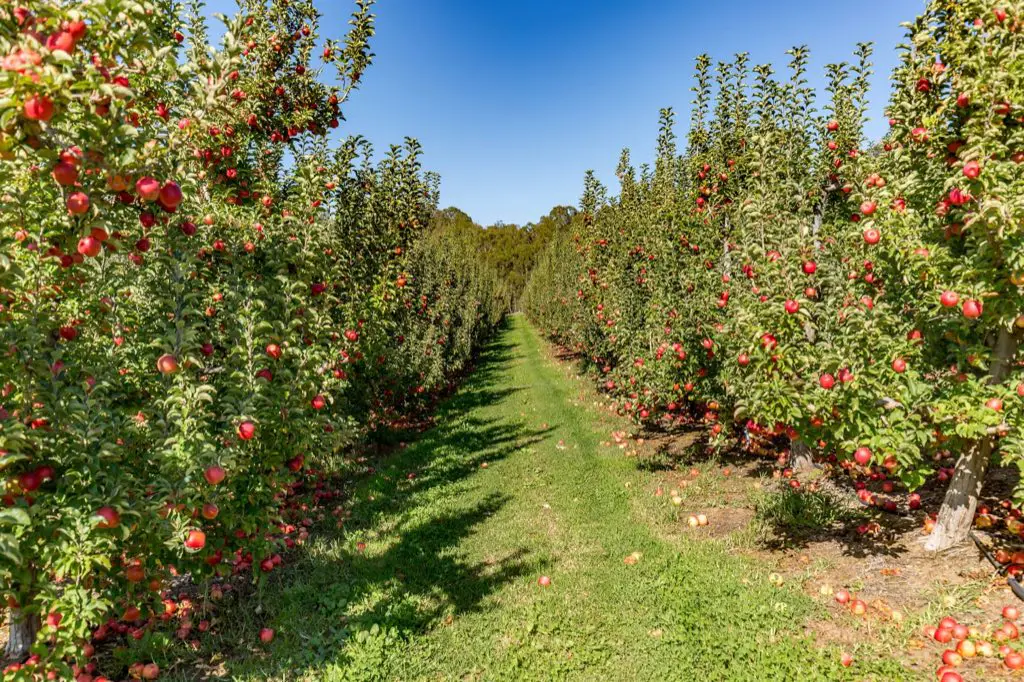
Professional photography should focus on healthy presentation, orchard layout, access, water and infrastructure. Do not stage the chemical store by moving products unsafely. Southside Media can work with the agent to plan an orchard visual story after safety and record checks are complete.
Detailed records can support buyer confidence, but they do not guarantee production, compliance, yield or future crop health. Keep claims within the evidence and let buyers undertake their own agronomic, environmental, legal and financial enquiries.
Keep the market context in perspective
REIWA's Donnybrook profile was updated 17 September 2026 for settled sales in the 12 months ending August 2026. It reported a median house sale price of $730,000, annual growth of 14.1 per cent, a lower quartile of $640,000, an upper quartile of $850,000 and a 46-day median selling time for houses.
These residential suburb statistics do not value an orchard, horticultural enterprise, water entitlement, crop, plant and equipment or business. A rural sale can involve different assets and professional assessments. Use the figures only as broad local context and obtain appropriate valuation, agency, accounting and legal advice.
Market source: REIWA Donnybrook suburb profile, data updated 17 September 2026.
Donnybrook orchard chemical handover checklist
- Export and preserve the required spray and application records.
- Map paddock, block or row identifiers consistently.
- Prepare a current chemical inventory with container condition.
- Match hazardous products to current safety data sheets.
- Review storage, security and access with a trained professional.
- Separate current stock, opened product, waste and sale inclusions.
- Keep harvest and withholding-period information with crop records.
- Arrange lawful removal or transfer before settlement.
- Share records through a controlled buyer due-diligence process.
A careful handover protects more than the sale campaign. It helps the incoming operator understand recent land use, gives advisers an organised evidence trail and reduces the risk of unlabelled stock or missing records becoming a last-minute settlement issue.
Prepare your Donnybrook orchard for the market
Request a free property appraisal introduction and marketing review. A licensed rural professional can consider comparable evidence while the marketing plan presents the orchard, infrastructure and local setting through professional photography and video.
Request a free property appraisal